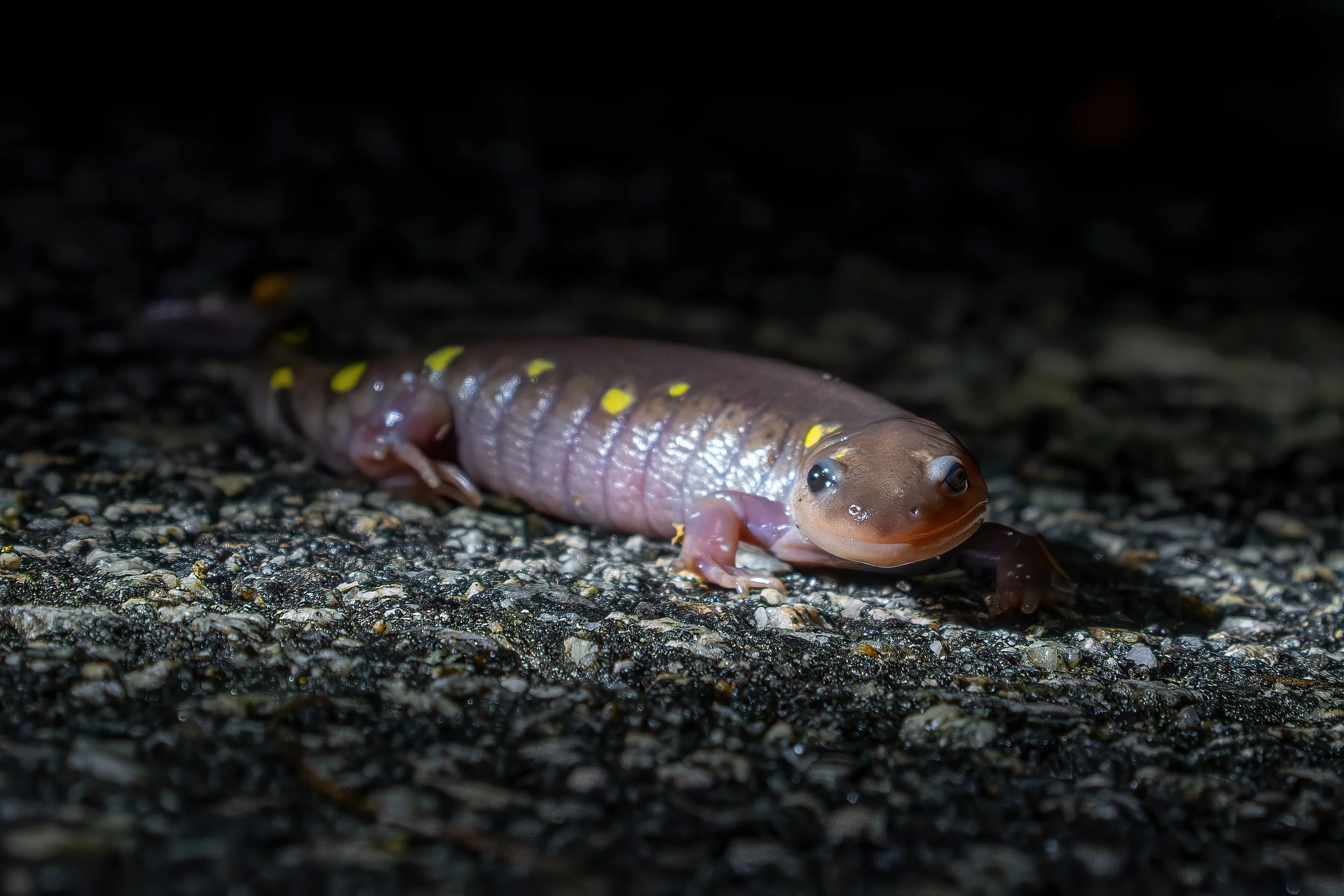
Every Spring A Little Known Migration Takes Place, Contending With Cars and Construction
On the first warm nights each spring, amphibians emerge in the thousands to migrate to their breeding grounds-crossing dangerous roads and barriers. A dedicated few don headlamps to help them.
During the first warm rainy nights each spring an awe-inspiring wildlife spectacle takes place. Each year, when the weather first climbs above 45 degrees Fahrenheit, hundreds of thousands of frogs and salamanders embark on a treacherous journey from their overwintering grounds in upland forests to vernal pools and ponds to breed and lay their eggs in mass migrations known as “Big Nights”. However, much of their crucial habitat is split by roadways.
This poses a unique challenge for them, as the animals are both too small to see and too slow to get out of the way, leading to increasingly high road mortality. In some areas amphibian mortality rates make up the majority of vertebrate roadkill, even more than squirrels, chipmunks, and deer. These mass casualties have become so bad that they have led to the removal of whole populations of amphibians from certain areas, are beginning to drive speciation with roads as boundaries, and pose a threat to some species’ survival. Fortunately, thanks to impassioned scientific outreach, people from all walks of life are now getting involved in their protection. Donning headlamps and reflective vests, families, students, and community members of all ages go out on these dark nights to help scientists monitor the animals and act as human crossing guards.
Over the past three field seasons, I have been accompanying these “amphibian crossing brigades” and documenting their efforts. I have primarily worked alongside the Harris Center for Conservation Education in New Hampshire, as well as Maine Big Night. Their efforts have yielded impressive and impactful results, with their data directly contributing to the conservation of important wetlands, temporary road closures on nights of heavy migrations, the state implementing their first amphibian crossing tunnels, and volunteers safely crossing large numbers of amphibians. The Harris Center’s trained volunteers alone have safely crossed over 100,000 amphibians at their sites across southern New Hampshire.

Scientists go over expected numbers and species for the evening's migration.
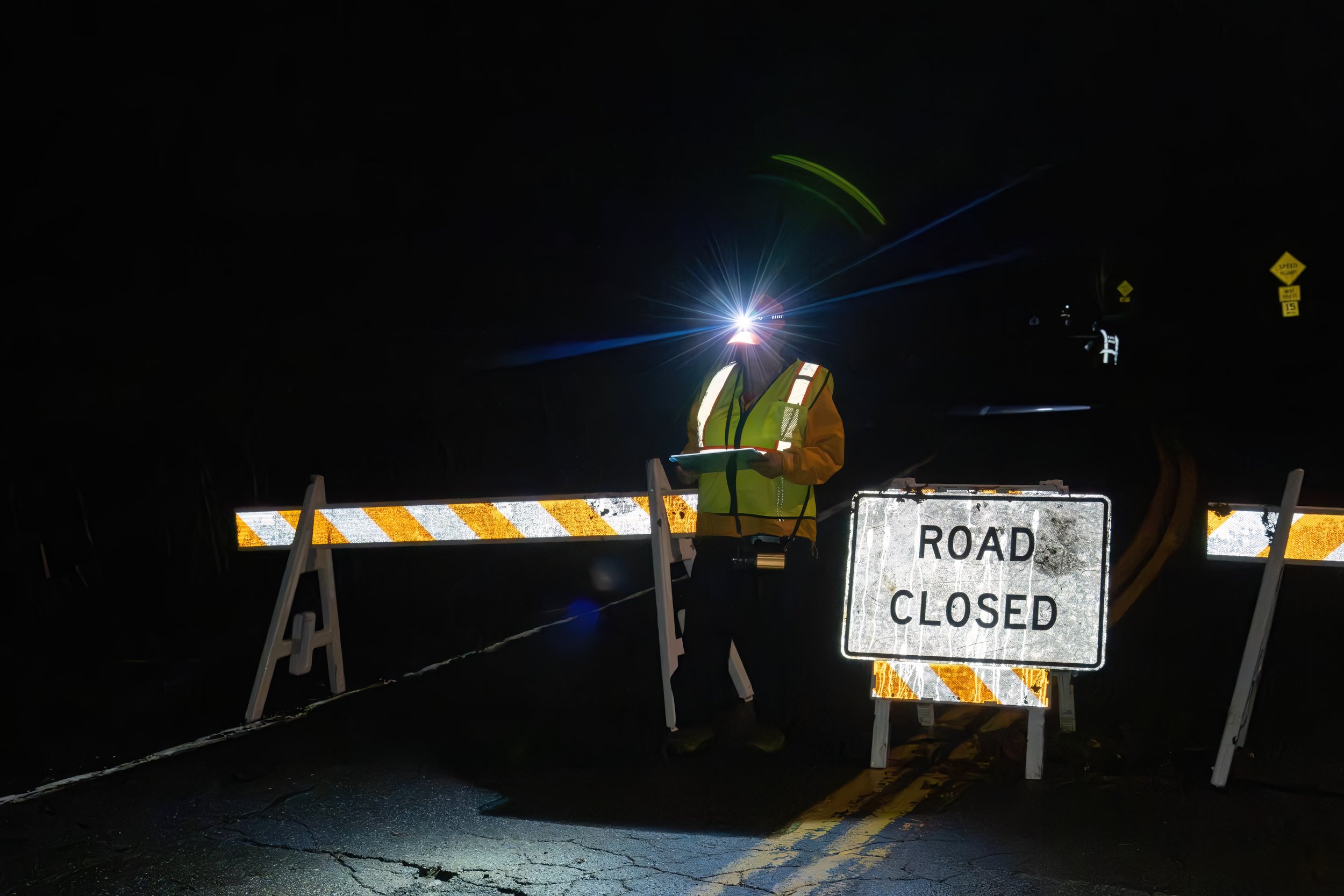
A "Big Night" is predicted, the stretch of road most likely to cause high mortality is officially closed for the evening.
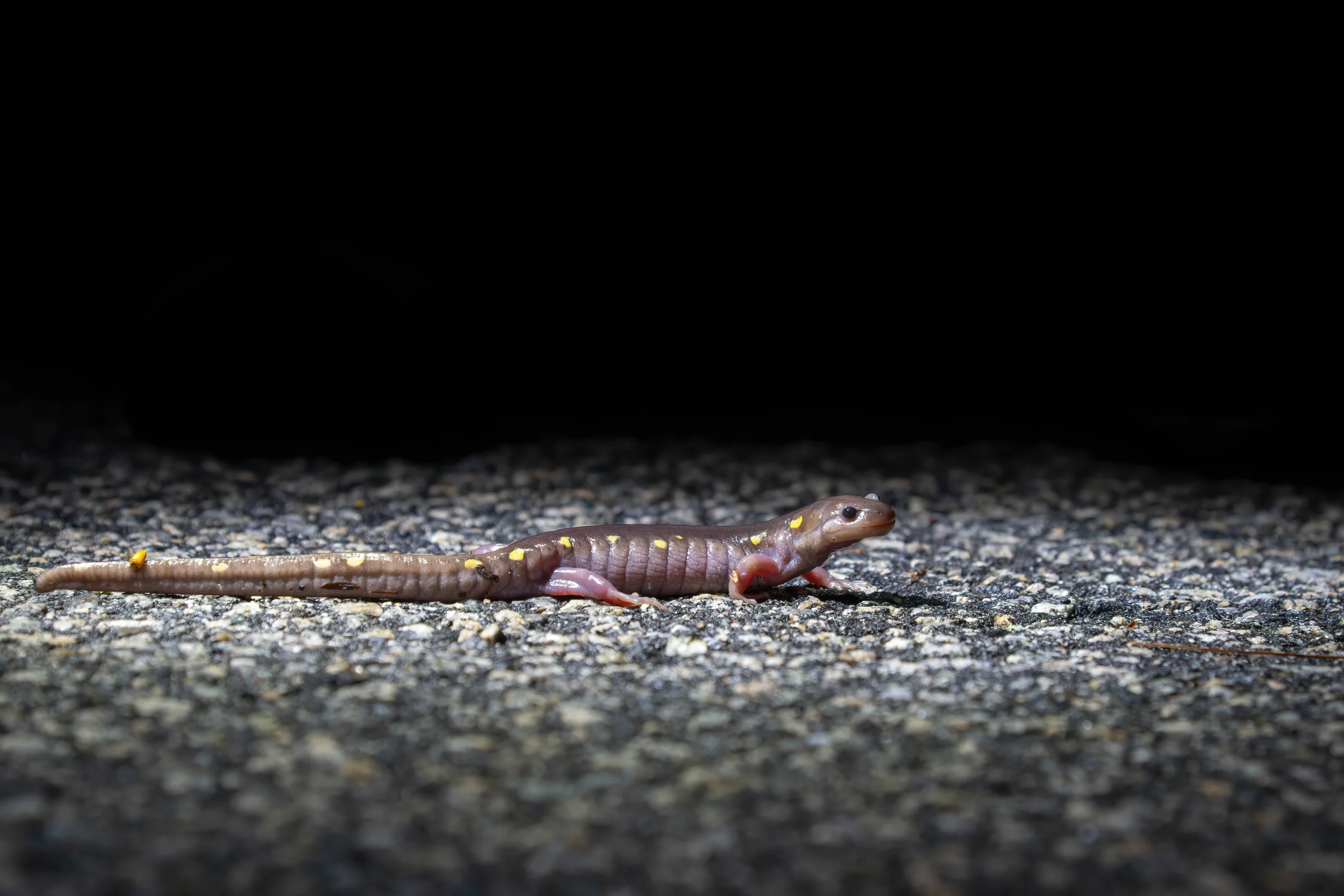
A Yellow-Spotted Salamander (Ambystoma maculatum) makes an appearance on the roadways.
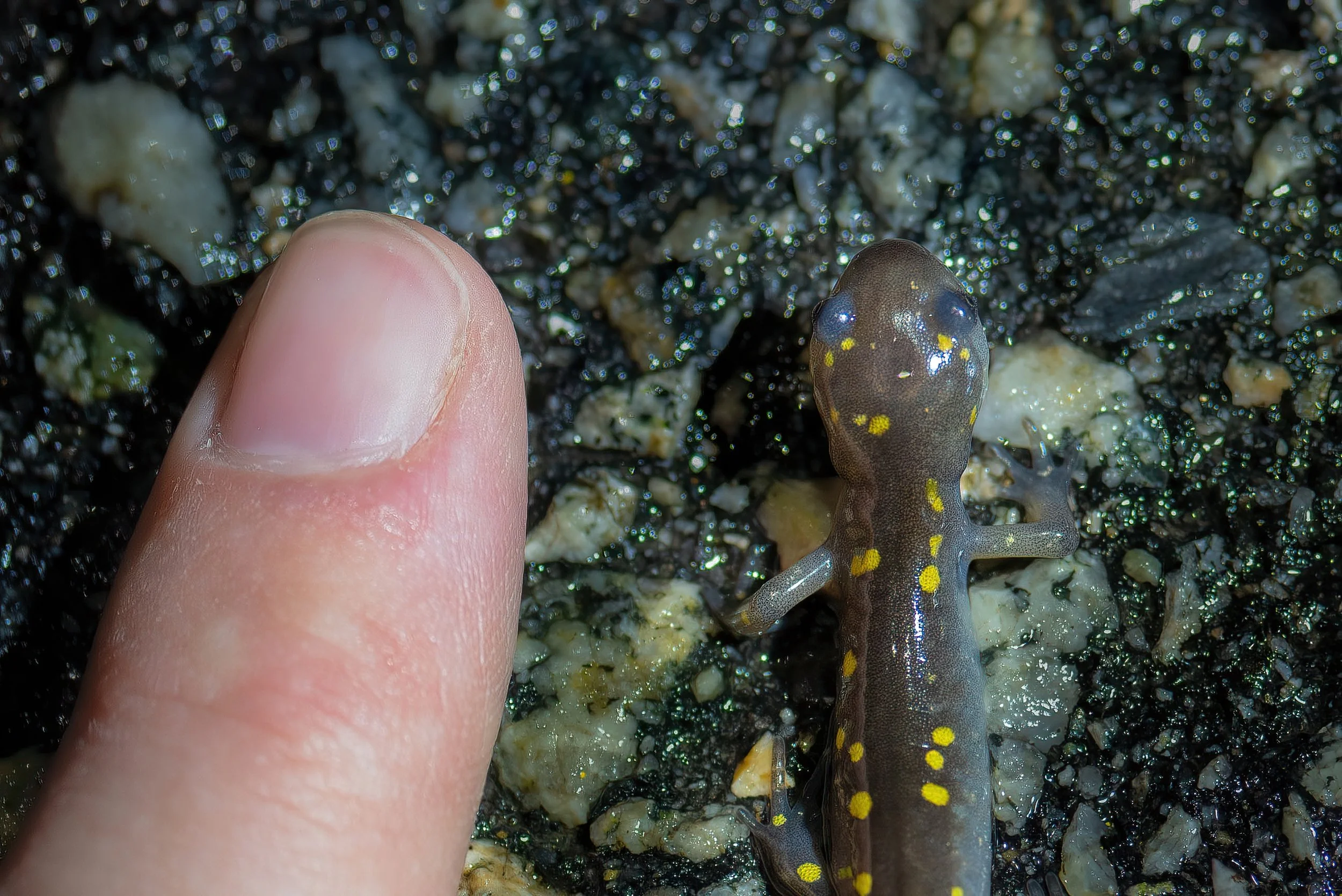
Yellow Spotted Salamanders have unique spot patterns, which are recorded by the scientists to see who returns year after year.
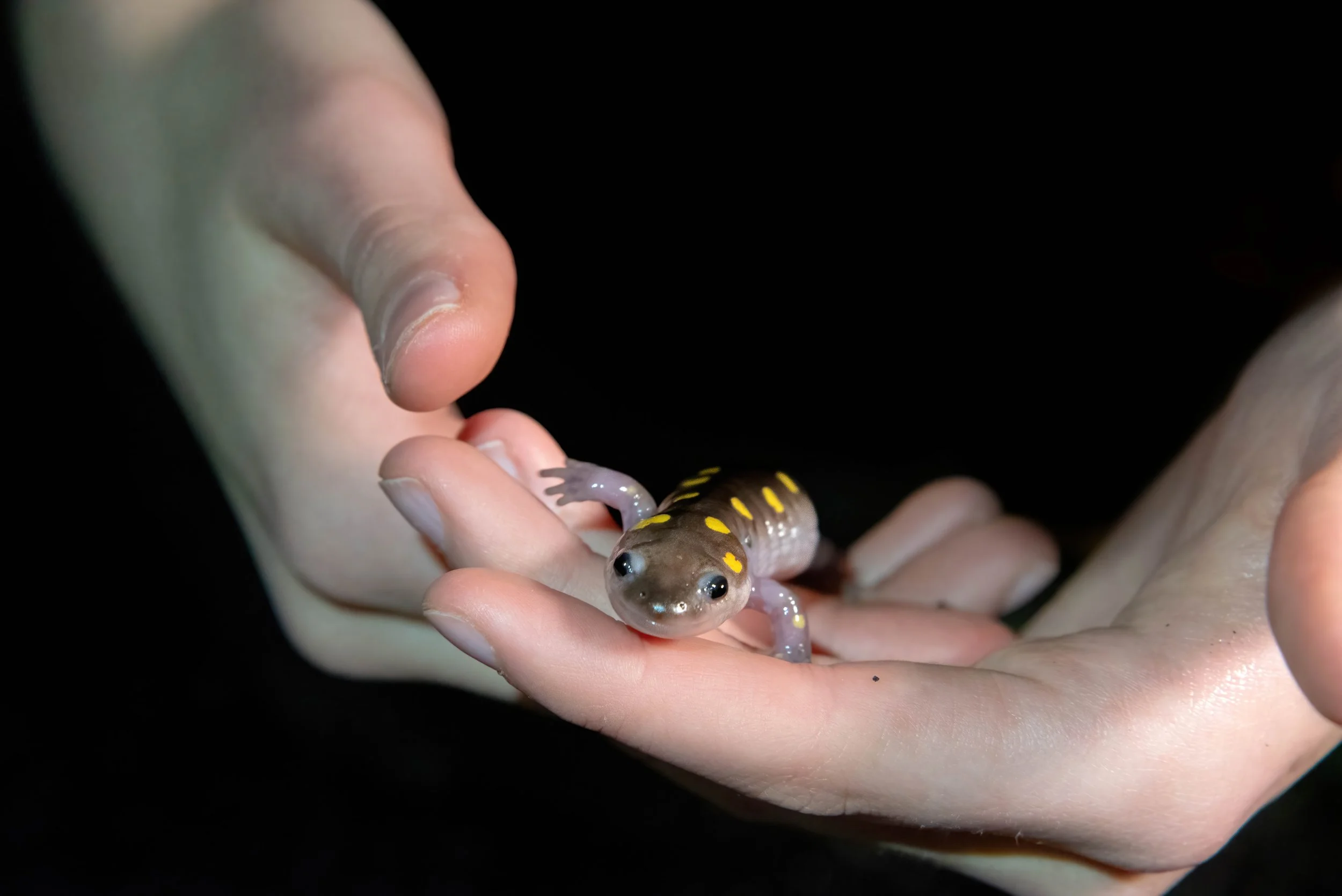
A Yellow Spotted Salamander is safely carried across the busy road by trained volunteers.
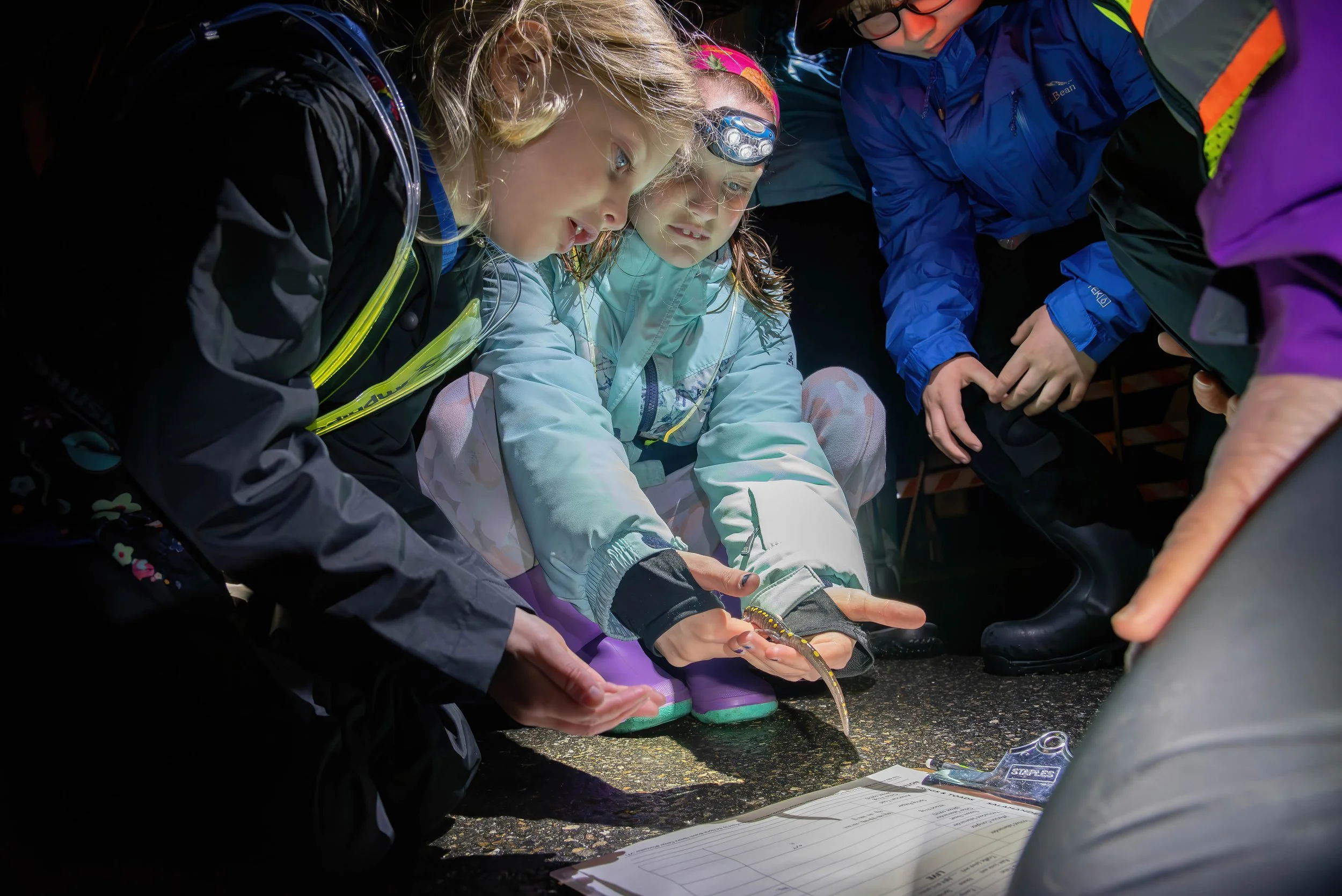
Students attend the crossing brigades to learn about their amphibian neighbors.
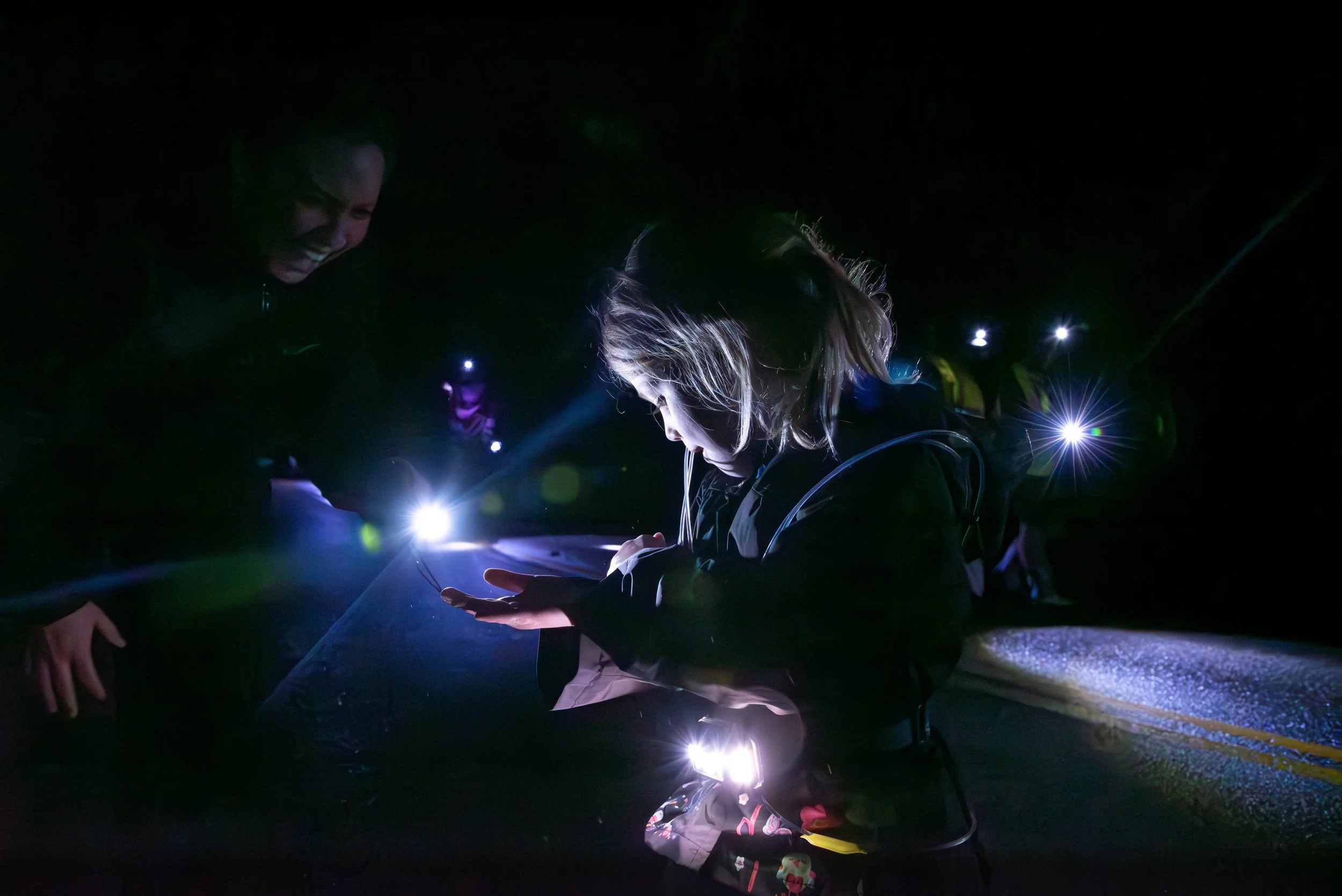
One of the student volunteers learns how to safely cross frogs across the closed roads.
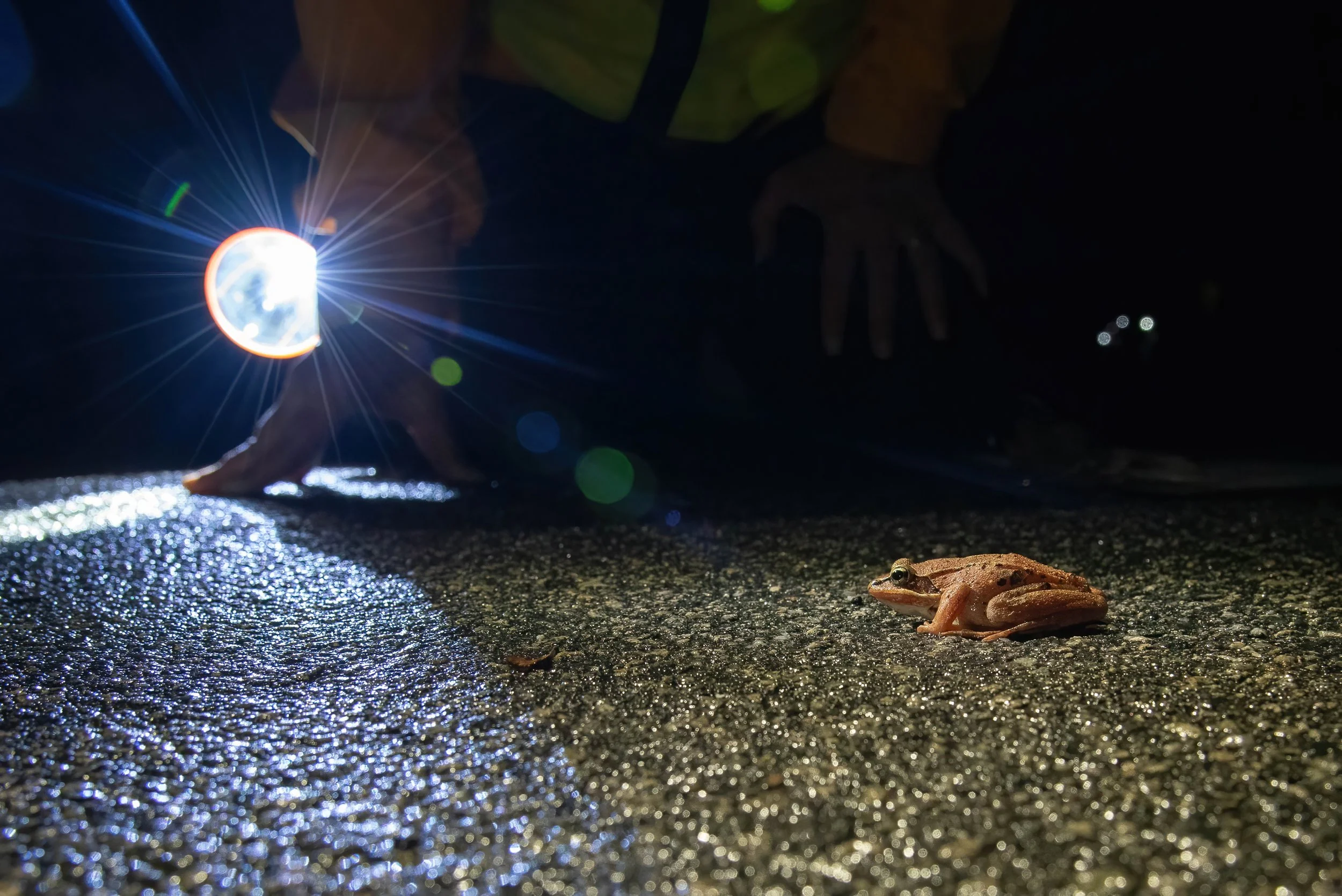
A Wood Frog (Lithobates sylvaticus), one of the first species to emerge, is escorted across the road.
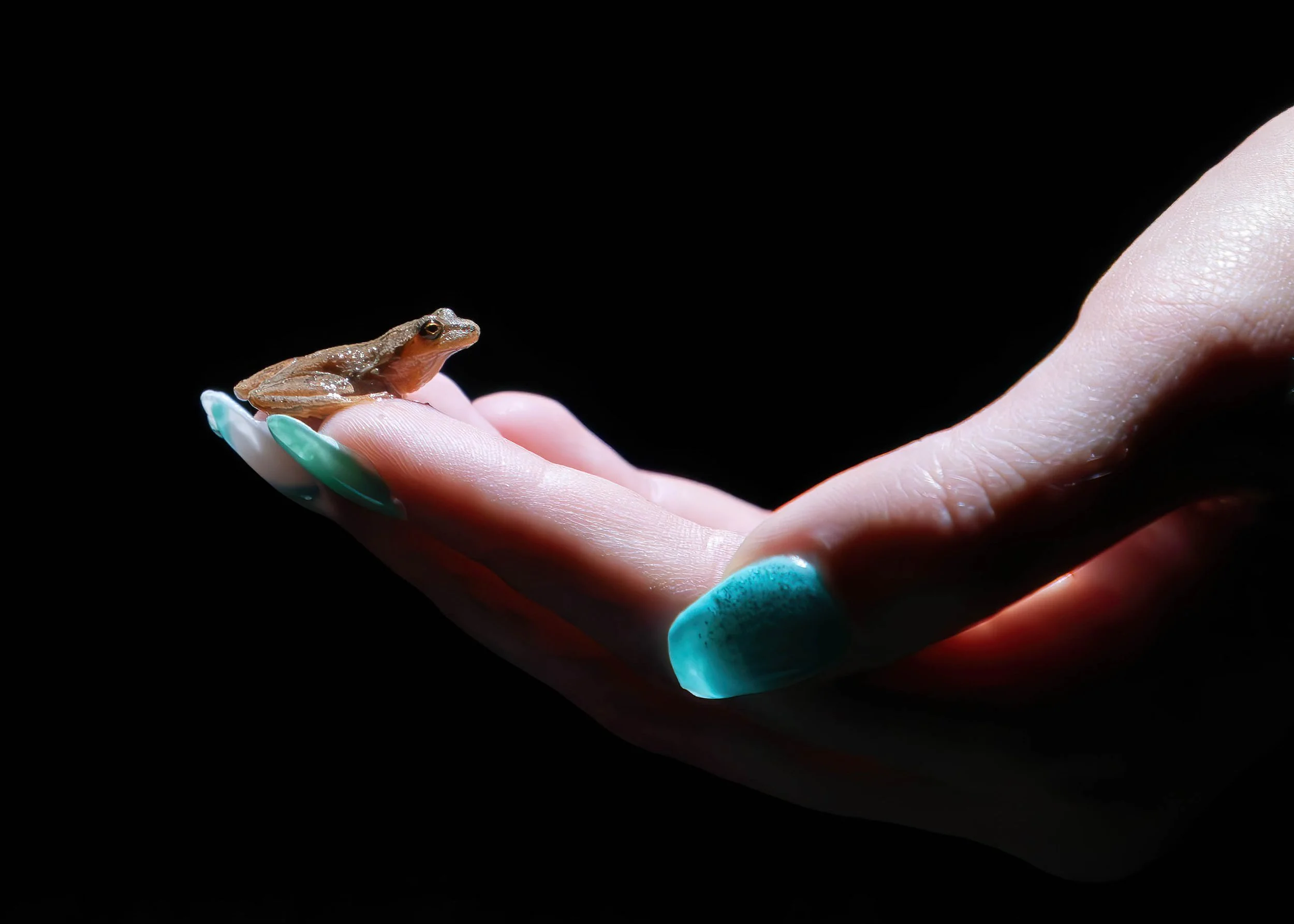
An adult Spring Peeper (Pseudacris crucifer) is counted and safely crossed by one of the scientists.
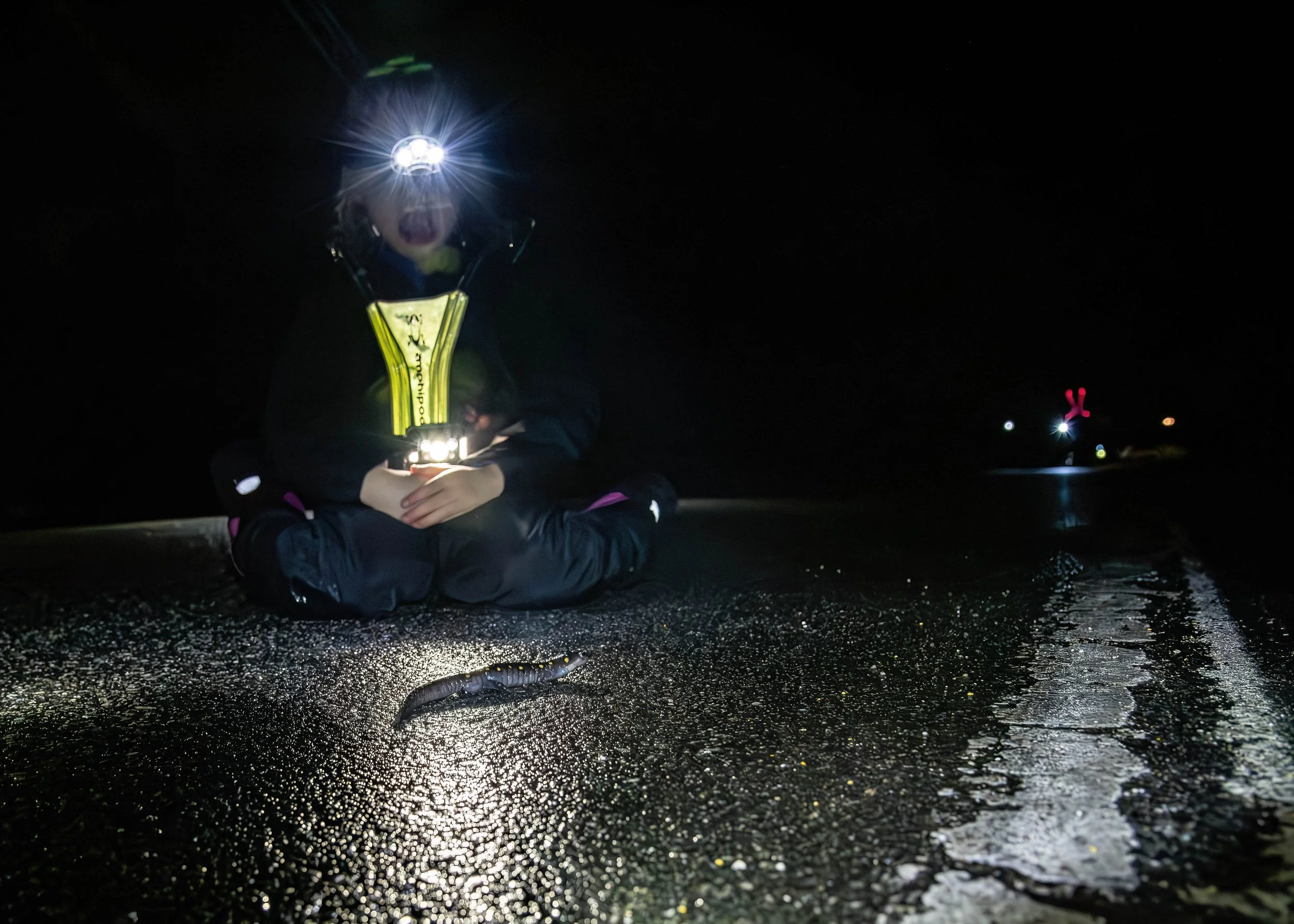
One of the student volunteers sees her first ever Yellow Spotted Salamander.
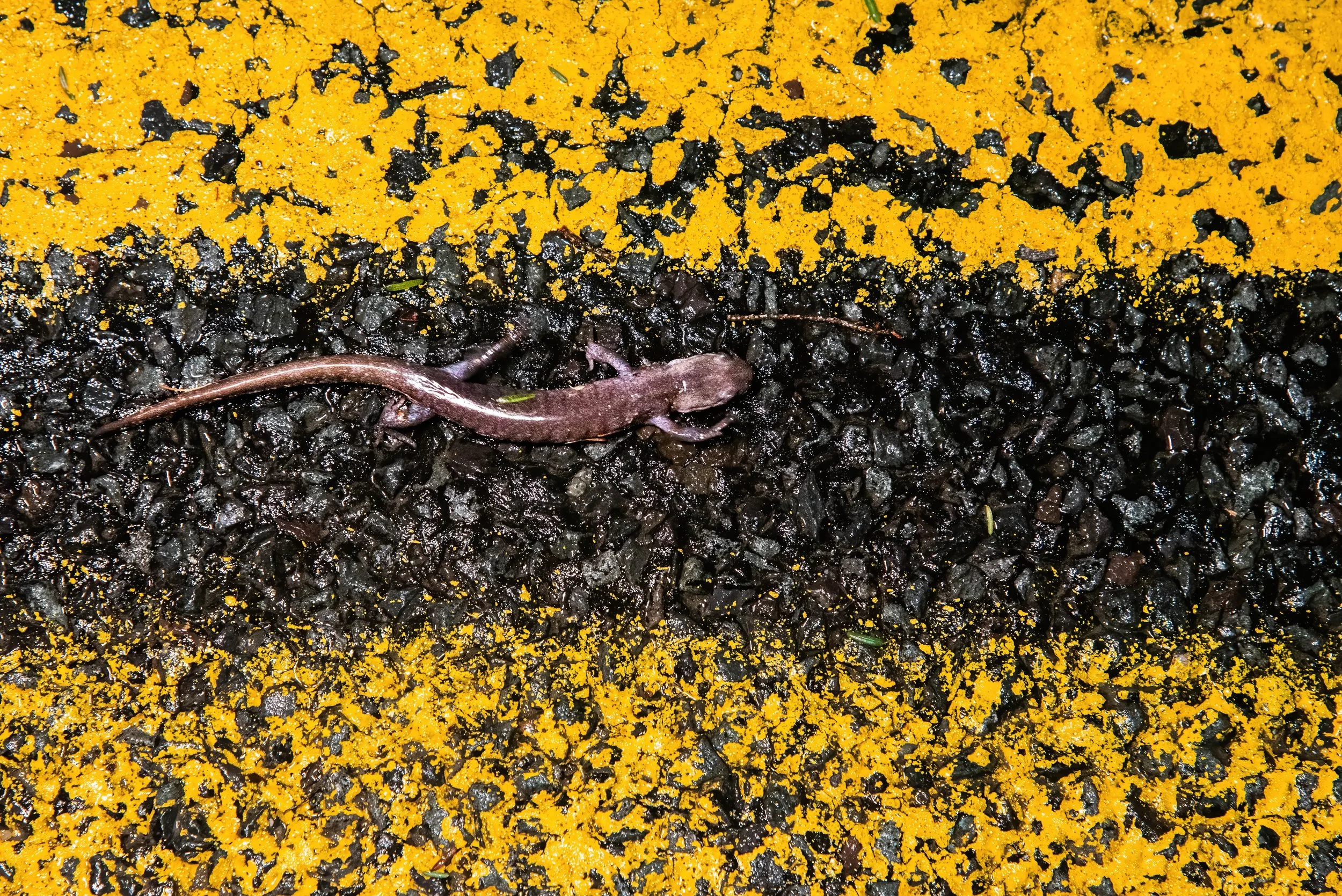
A Jefferson's Salamander (Ambystoma jeffersonianum), a species of greatest conservation need in the state, crosses a busy roadway.
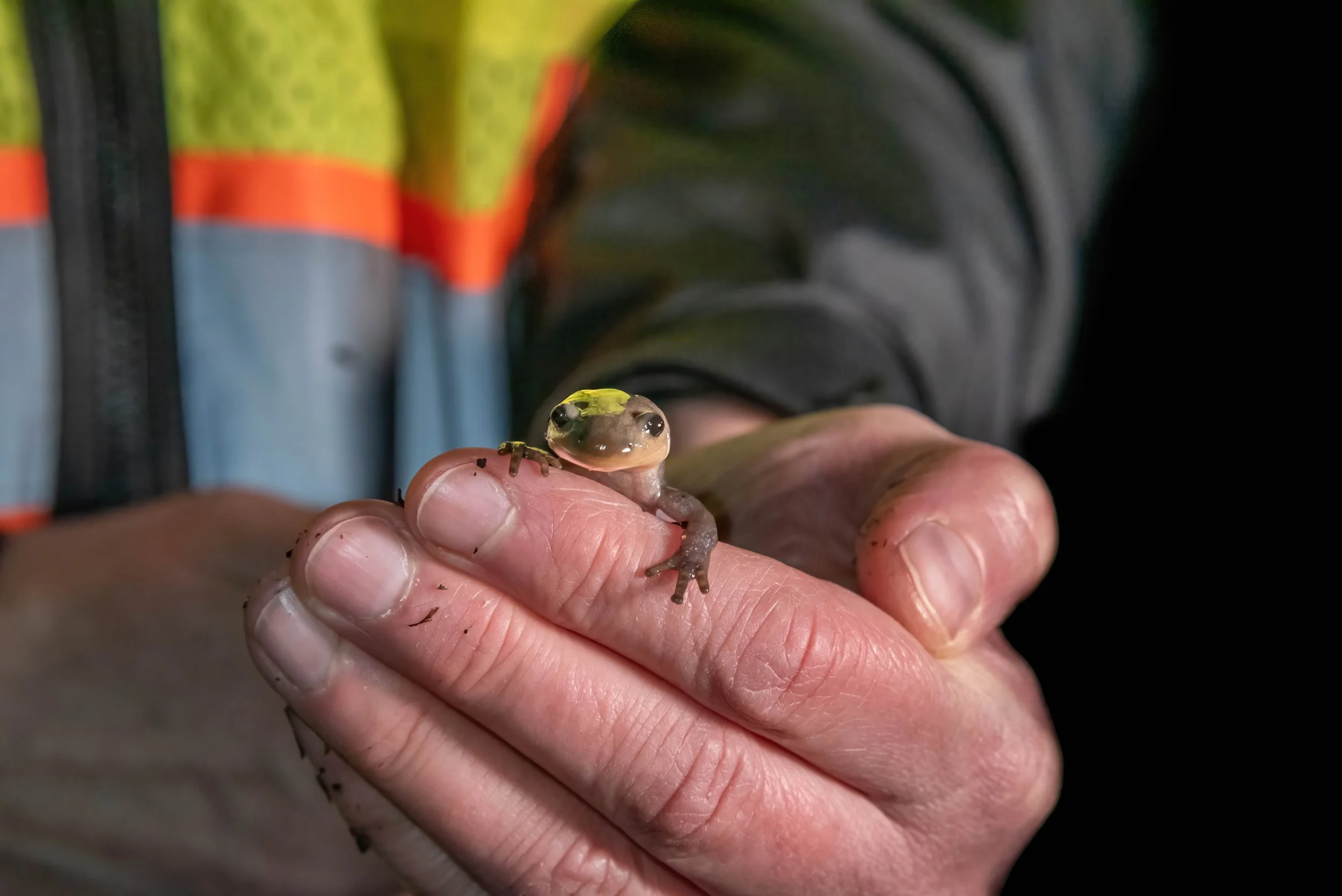
A Jefferson's Salamander, vulnerable to extirpation across the region, is safely counted and crossed by a scientist.
All images for this story taken by Malachy Duggan.
Select images from this work used by the The Harris Center for Conservation Education in their researching and protecting amphibian species in Southern New Hampshire.