In The Berkshires, Students and Volunteers Help Fight Climate Change By Transforming An Iconic Forest
Vital forest habitat faces threats from warming temperatures and increasingly unpredictable rainfall due to climate change. Notchview is setting out to see how forest transformation can help.
“With over 3,100 acres of forests, wetlands and grasslands, Notchview—in the Berkshire County hilltown of Windsor—provides visitors with ample space to recreate, from winter cross-country skiing and snowshoeing, to spring wildflowers and summer hikes along miles of trails. The forest ecosystem that holds cherished memories for many also provides key environmental functions including wildlife habitat and biodiversity, healthy soils and water, and carbon sequestration.
Across Massachusetts, the habitat for many northern tree species is projected to decline as climate conditions become less suitable. Species like red spruce and balsam fir are expected to be most vulnerable, particularly in places like Notchview, which lie at the southernmost part of their natural range. Species like beech, hemlock, and ash are dealing with diseases and pests that put them at greater risk, too.
At Notchview, the team is working on active transformation of the forest ecosystem to build its resiliency across approximately 100 acres. The ongoing project led by the Natural Resources team seeks to proactively address the changing forest by deliberately introducing (native species) and regenerating species that are projected to adapt to new climate conditions in the region.
Red oak seedlings and acorns were collected from a variety of Trustees properties where the trees are dominant parts of the forest. By sourcing from various properties in regions of the state already warmer than Windsor, the team will be able to observe if slight differences in the genetics of the red oaks across the region may make them successful with the current environmental conditions at Notchview. The seedlings have been growing at a local farm run by the Native Plant Trust to allow for several years of growth before being planted at Notchview. The young trees will be planted inside a structure called a slash wall, which will enclose approximately 12 acres.
Slash walls prevent deer and moose from eating the tree seedlings. “Slash” is a term that refers to material that’s left in the woods after timber harvesting, often remnants like treetops and branches. Over time the wall that is created around the seedlings will degrade naturally while the seedlings turn into trees outside of the reach of deer and moose.
Material to build the slash wall was harvested from approximately 25 acres within and surrounding the location of the slash wall at Notchview. The red oaks, which grow faster in forest openings without deep shade, will grow along with some residual trees within the slash wall. Outside of the wall, an additional 20 acres of forest was harvested to allow for additional oak planting, allowing for comparative monitoring of success of tree growth within and outside of the structure.”
-The Trustees, “Fostering Forest Resilience”
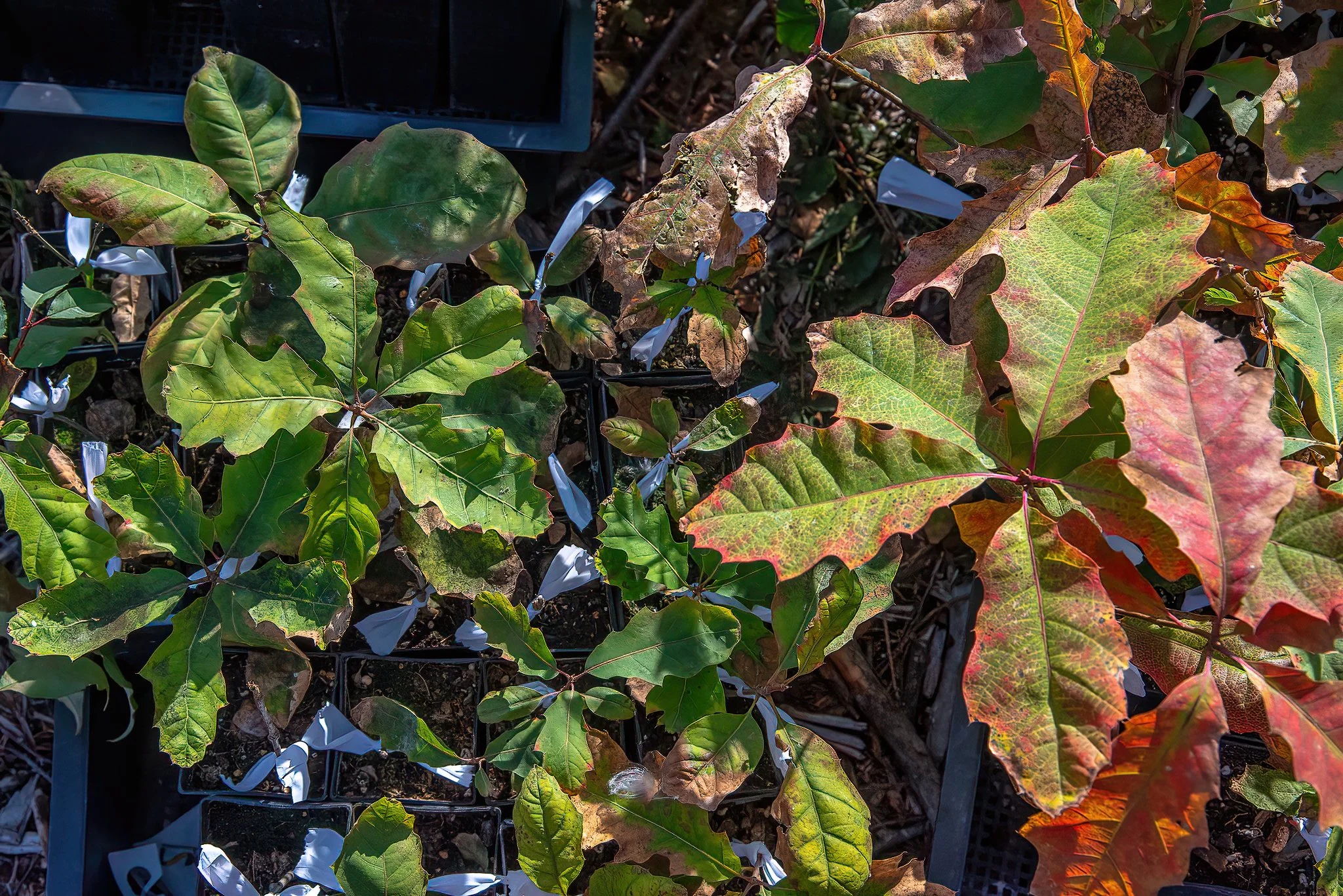
Native Red Oak (Quercus rubra) and Hickory (Carya sp.) saplings ready for planting in the forest transformation area.
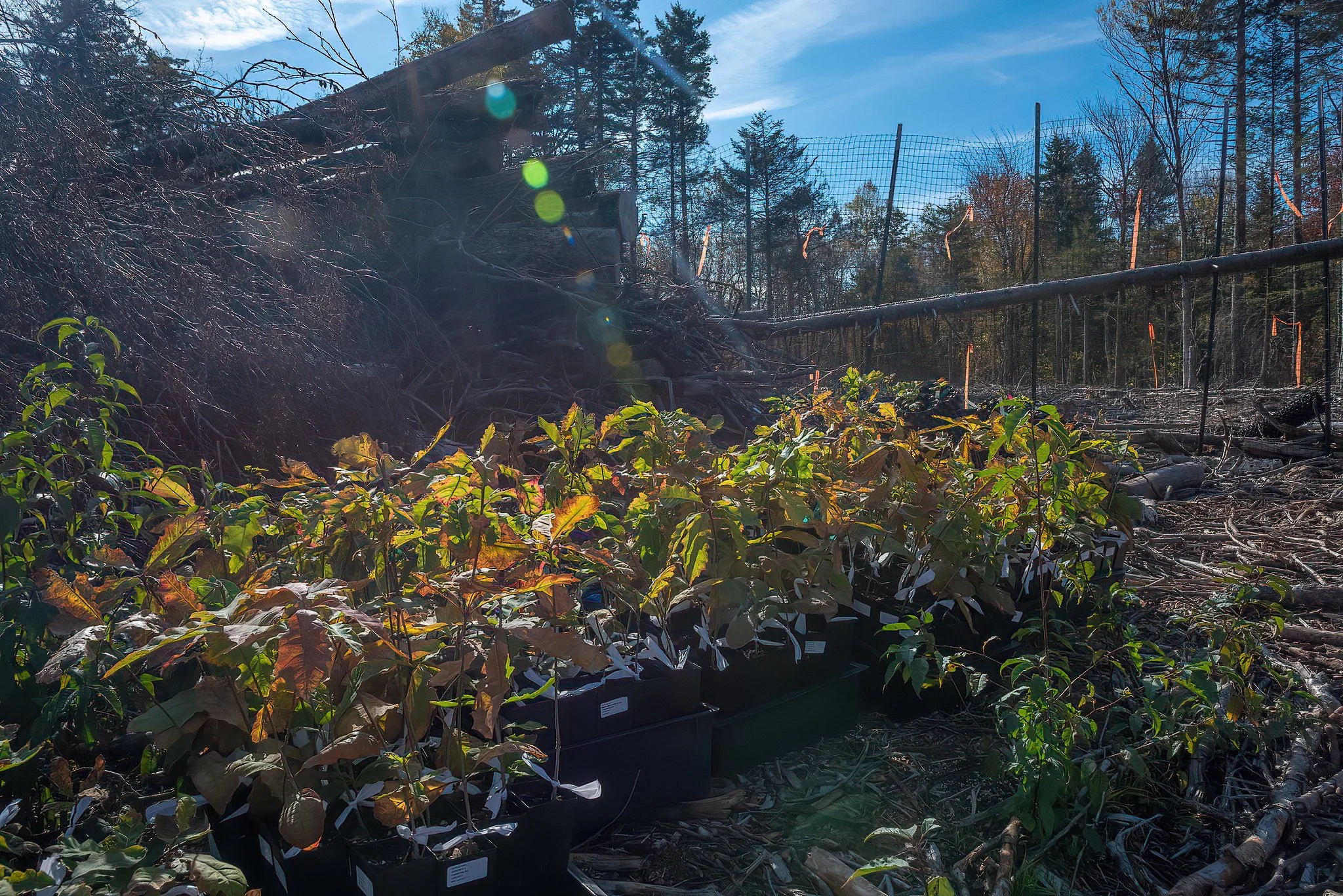
New young trees await planting just inside the slashwall where they are protected from moose and deer foraging.
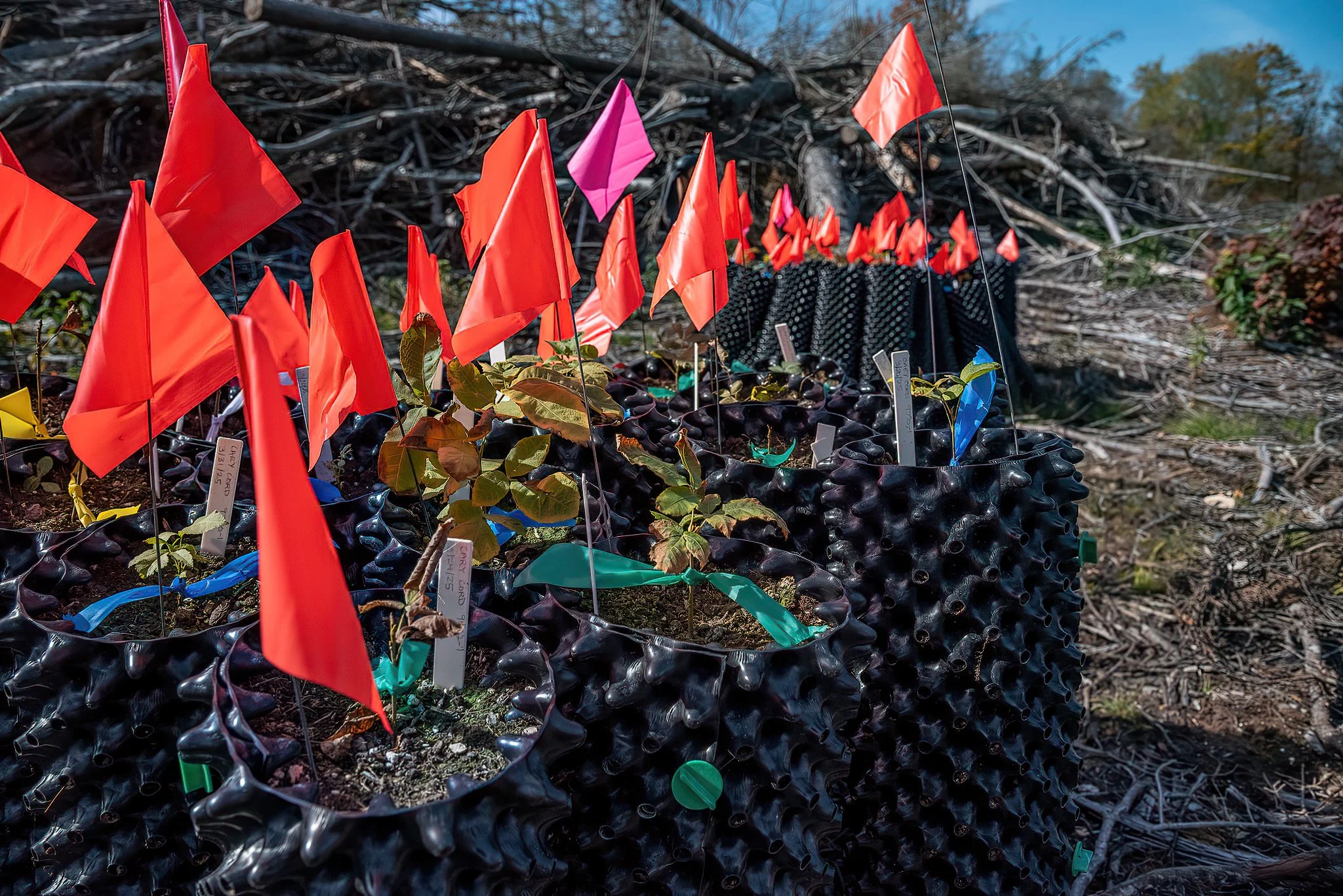
Saplings are packed into containers to safely transport them and their already extensive root systems.
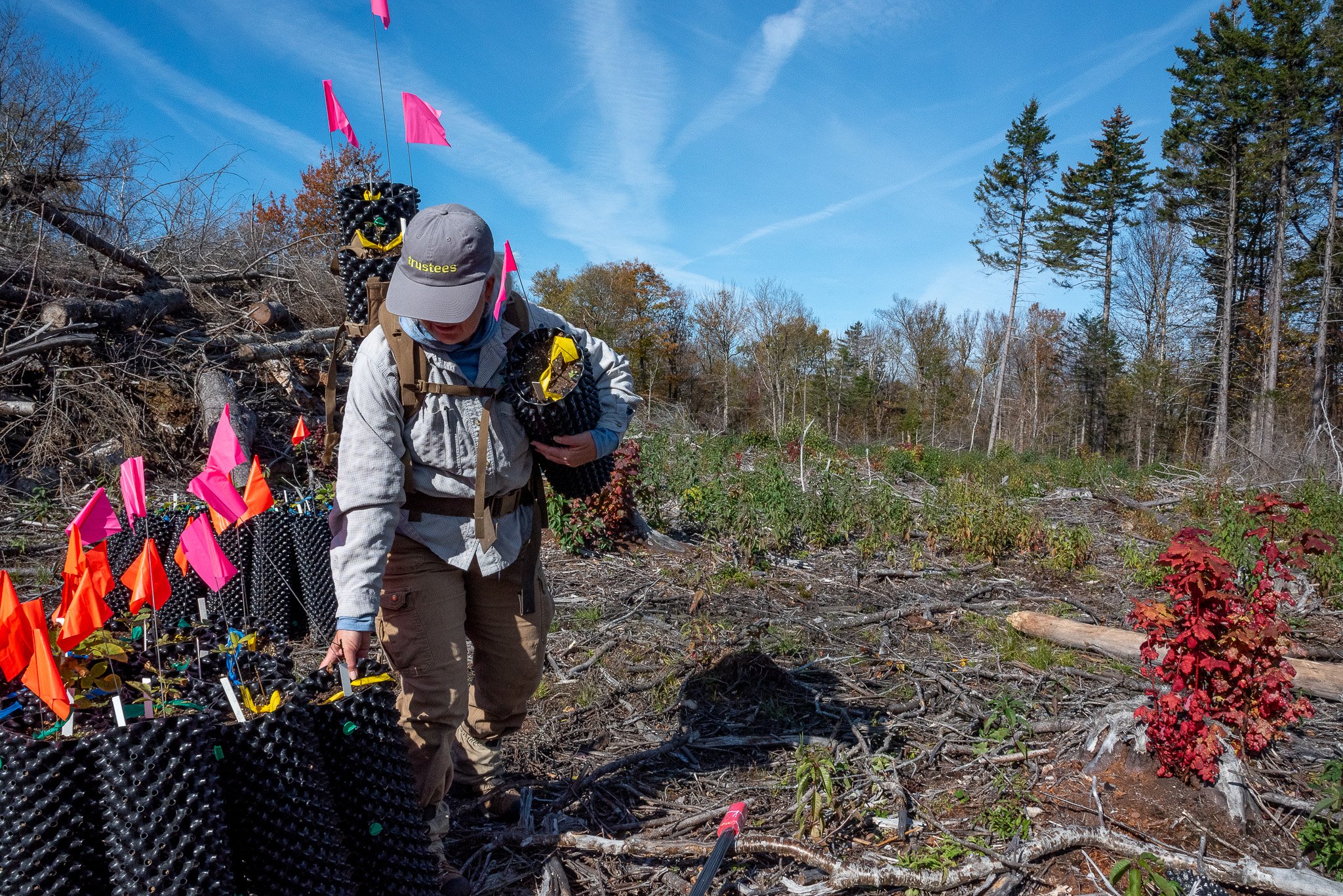
The young trees are transported on foot by hand across the difficult terrain to their new planting sites.
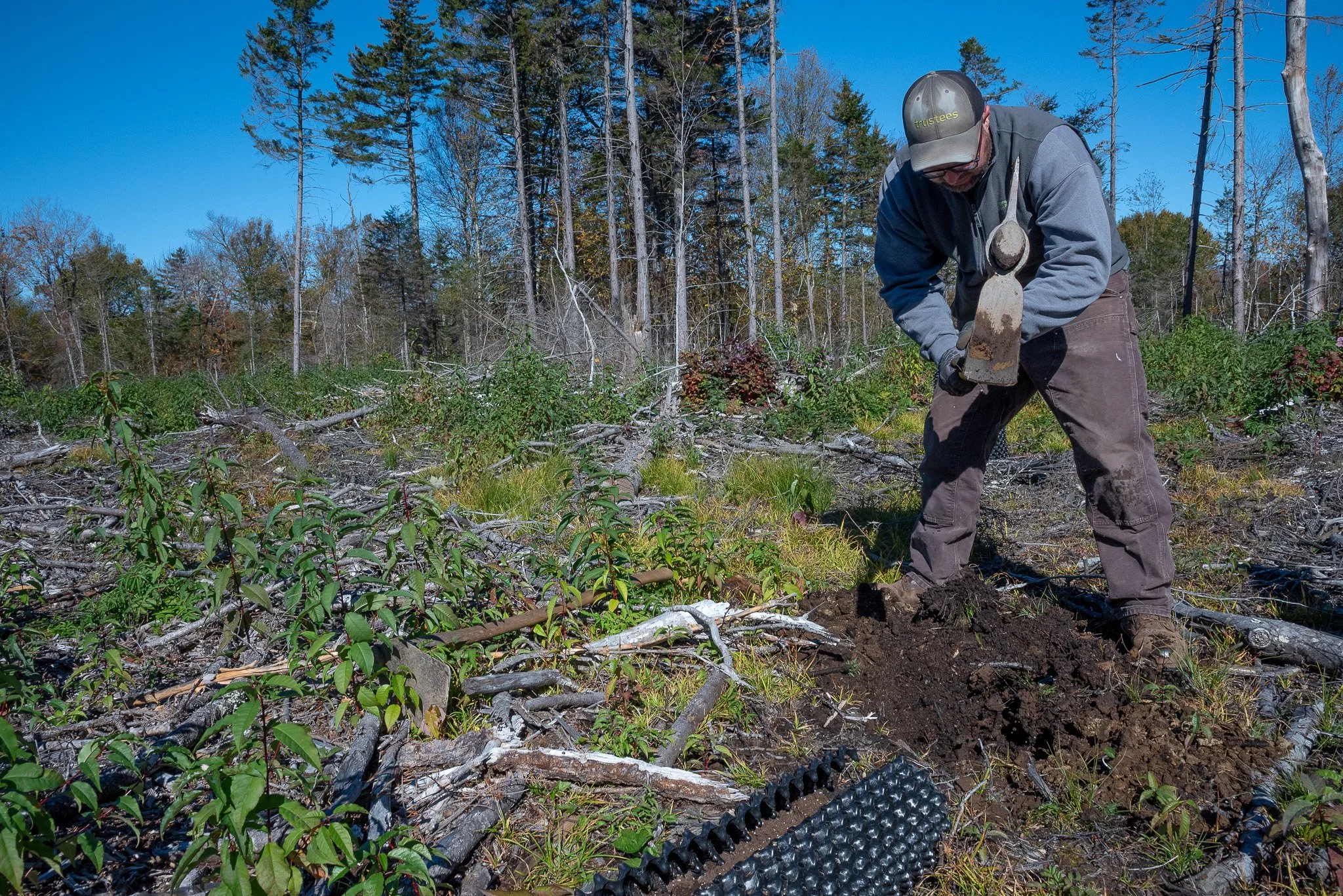
One of the volunteers breaks up ground where the new saplings will be planted, cutting through old roots into good soil.
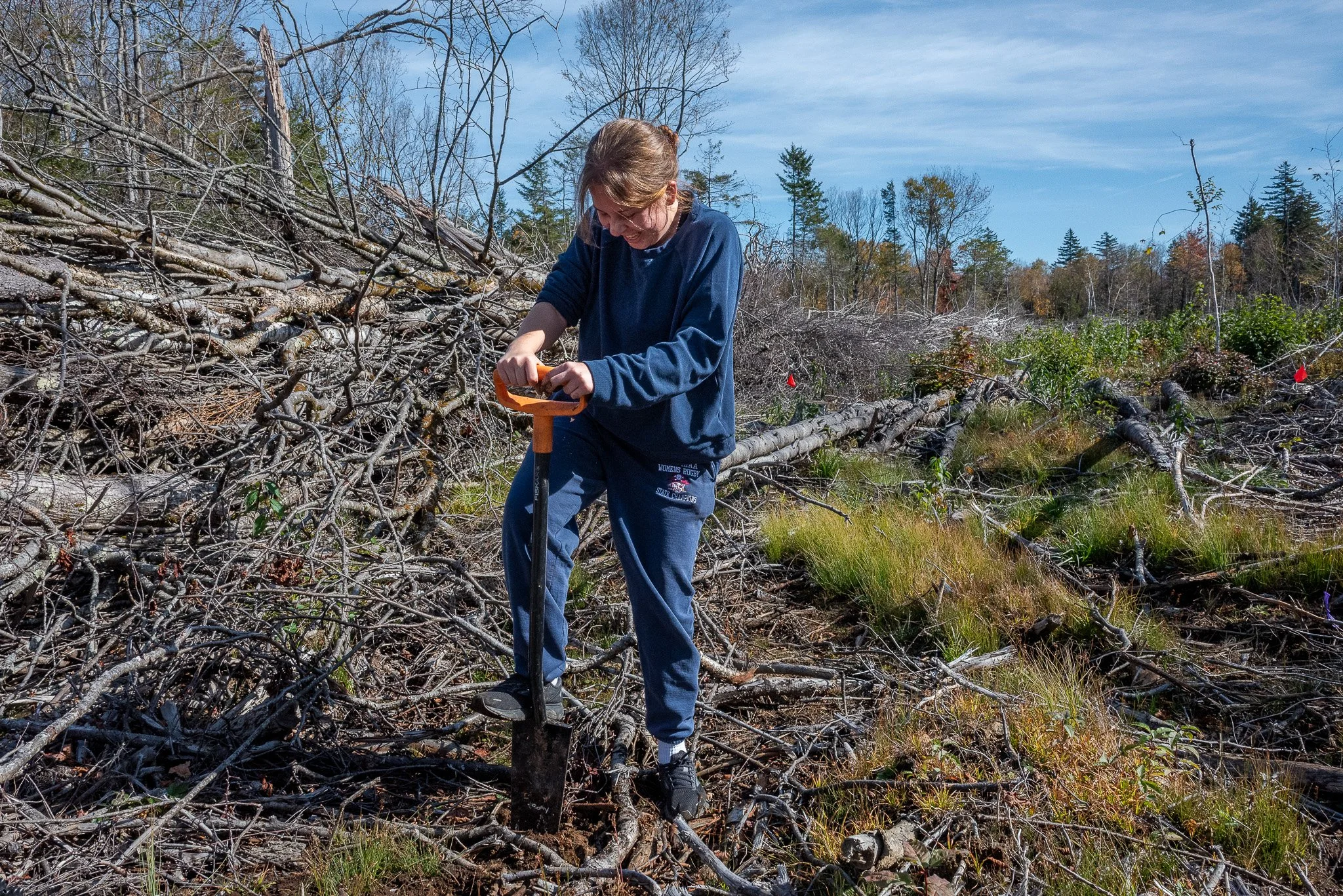
A student volunteer from a local college uses a bladed shovel to break ground near the slashwall.
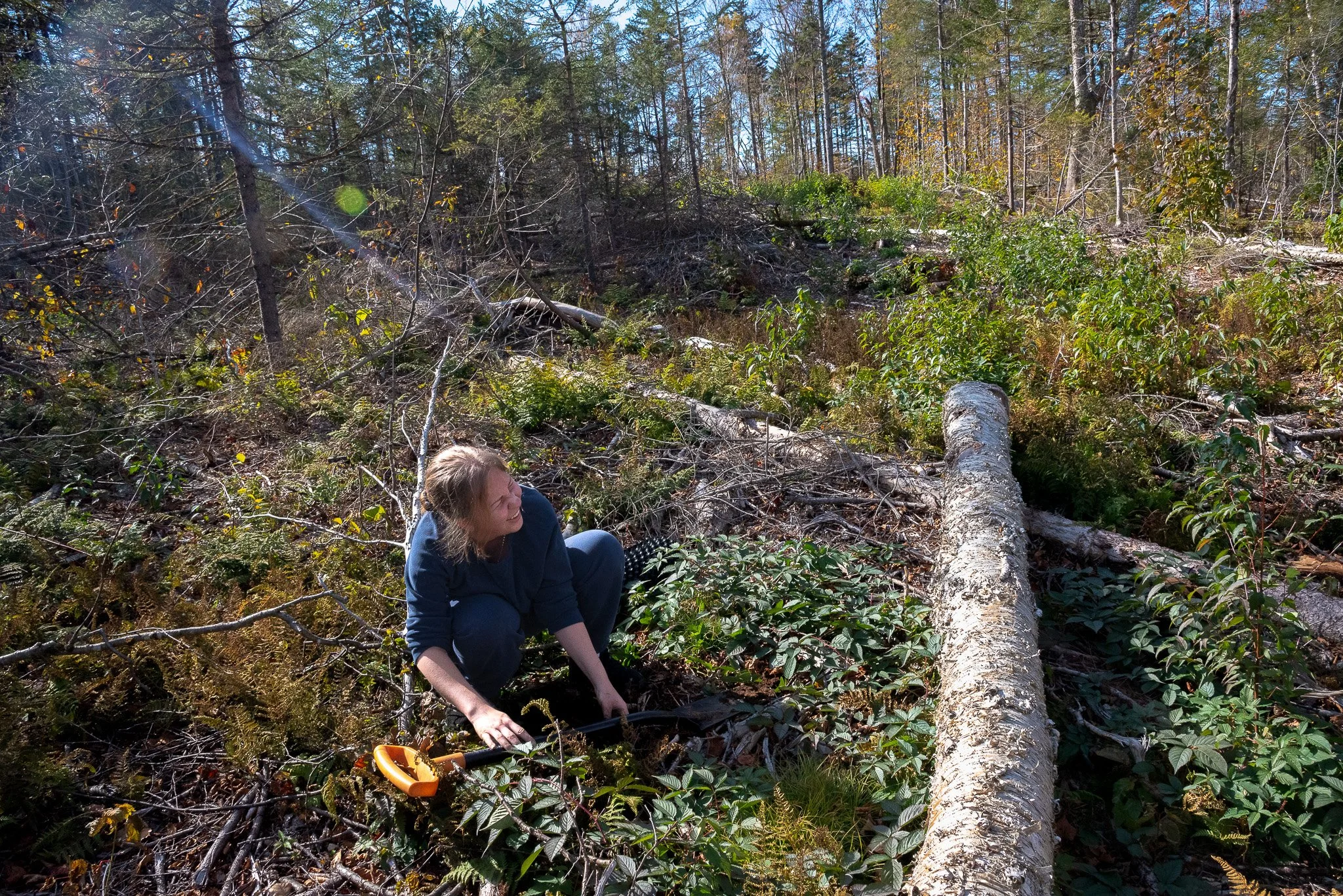
A student volunteer clears thick brambles by hand to make room for the new trees.
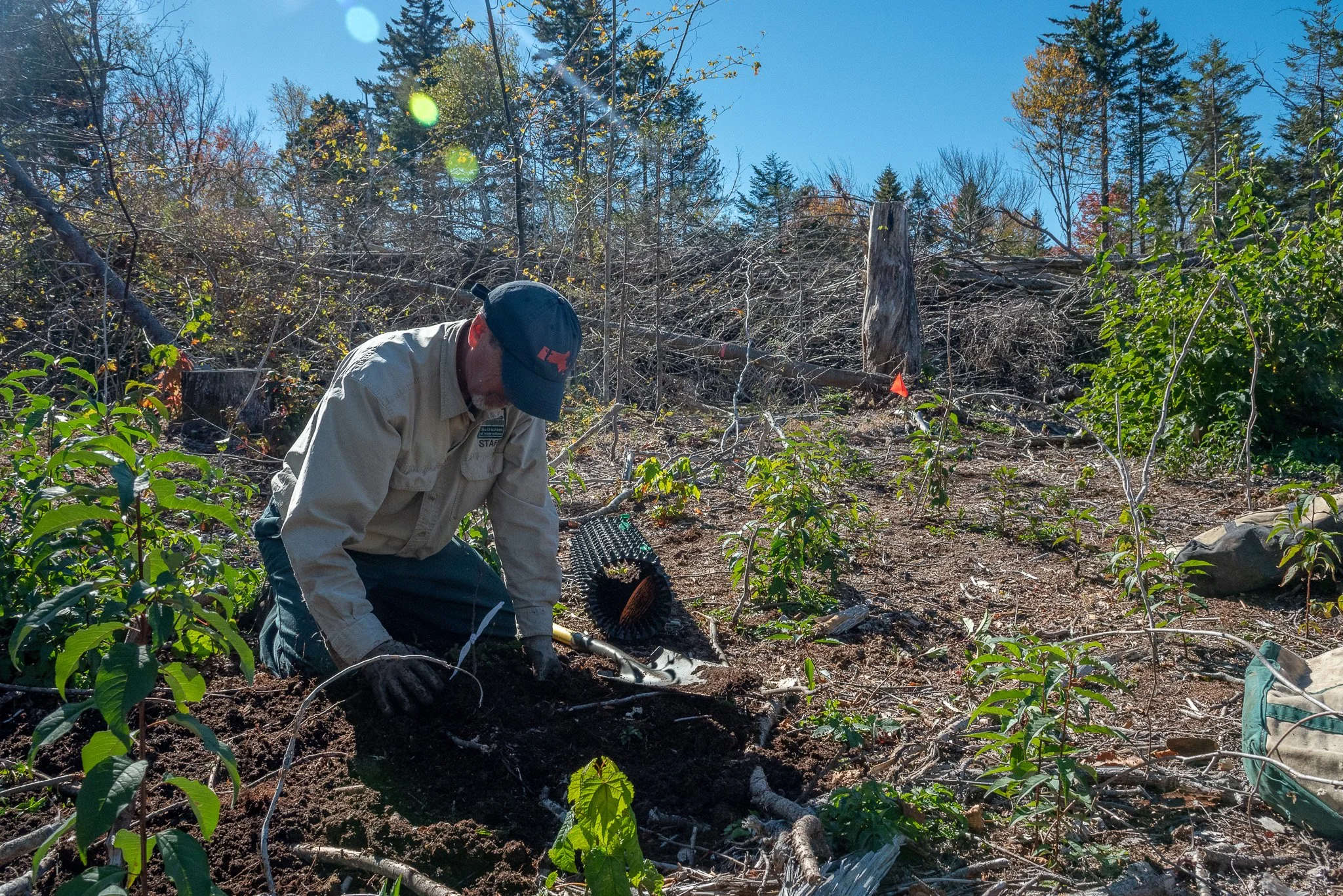
One of the volunteers selects a safe site for the new sapling behind the slashwall, ensuring the young trees won't be eaten by moose or deer.
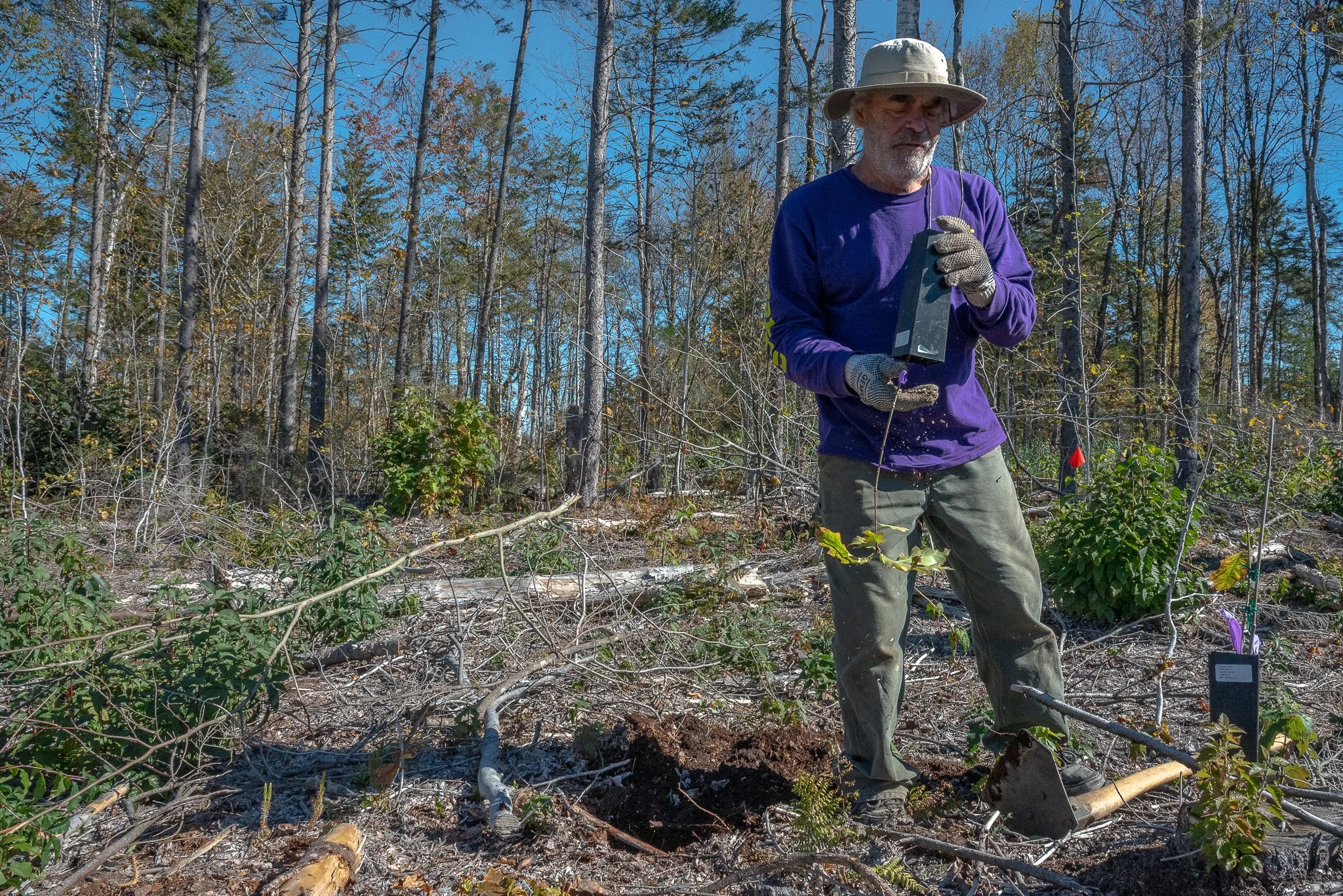
One of the volunteers plants a Red Oak (Quercus rubra) sapling in its new home where it may remain for hundreds of years.
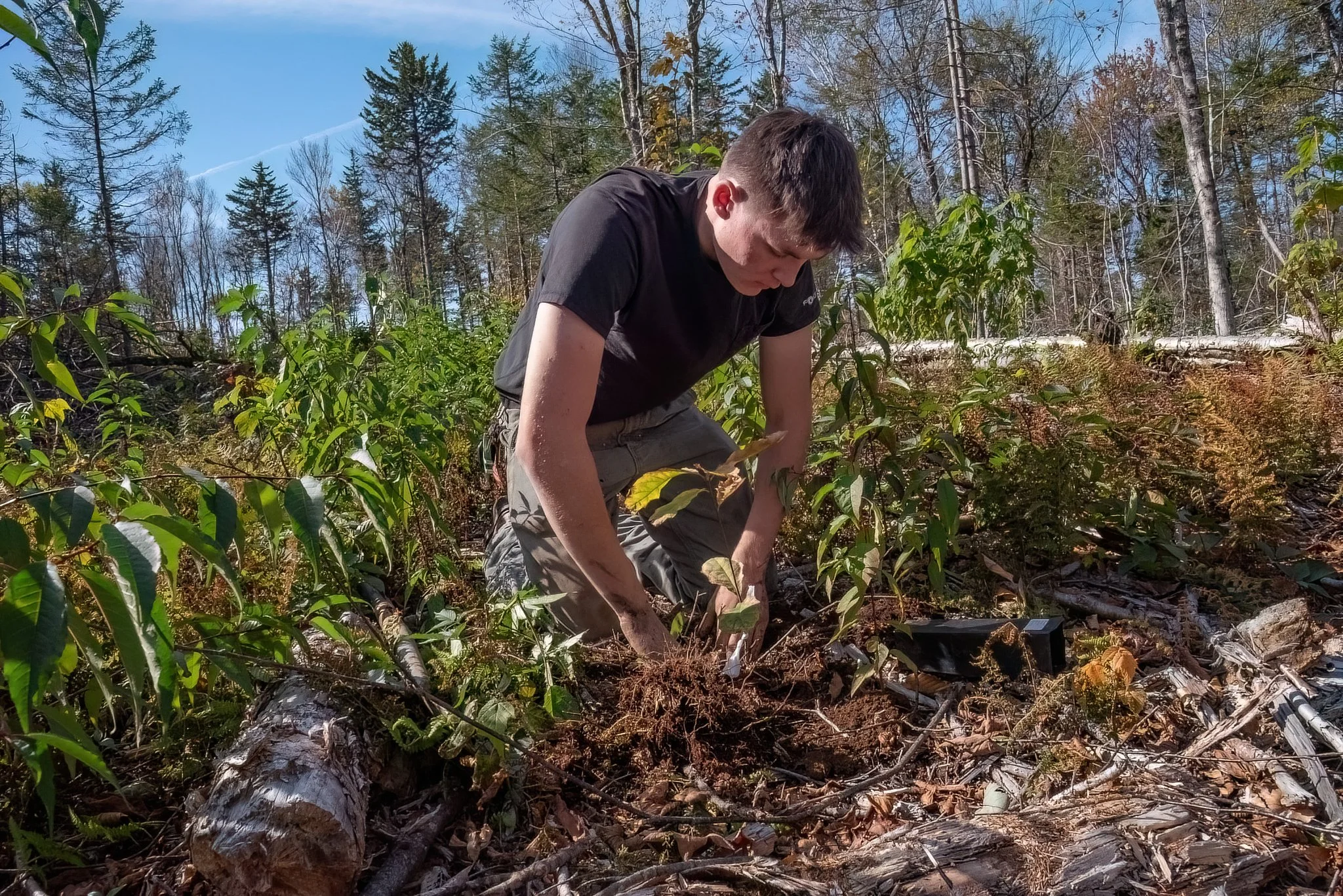
A student volunteer carefully places a Red Oak (Quircus rubra) sapling in its new home)
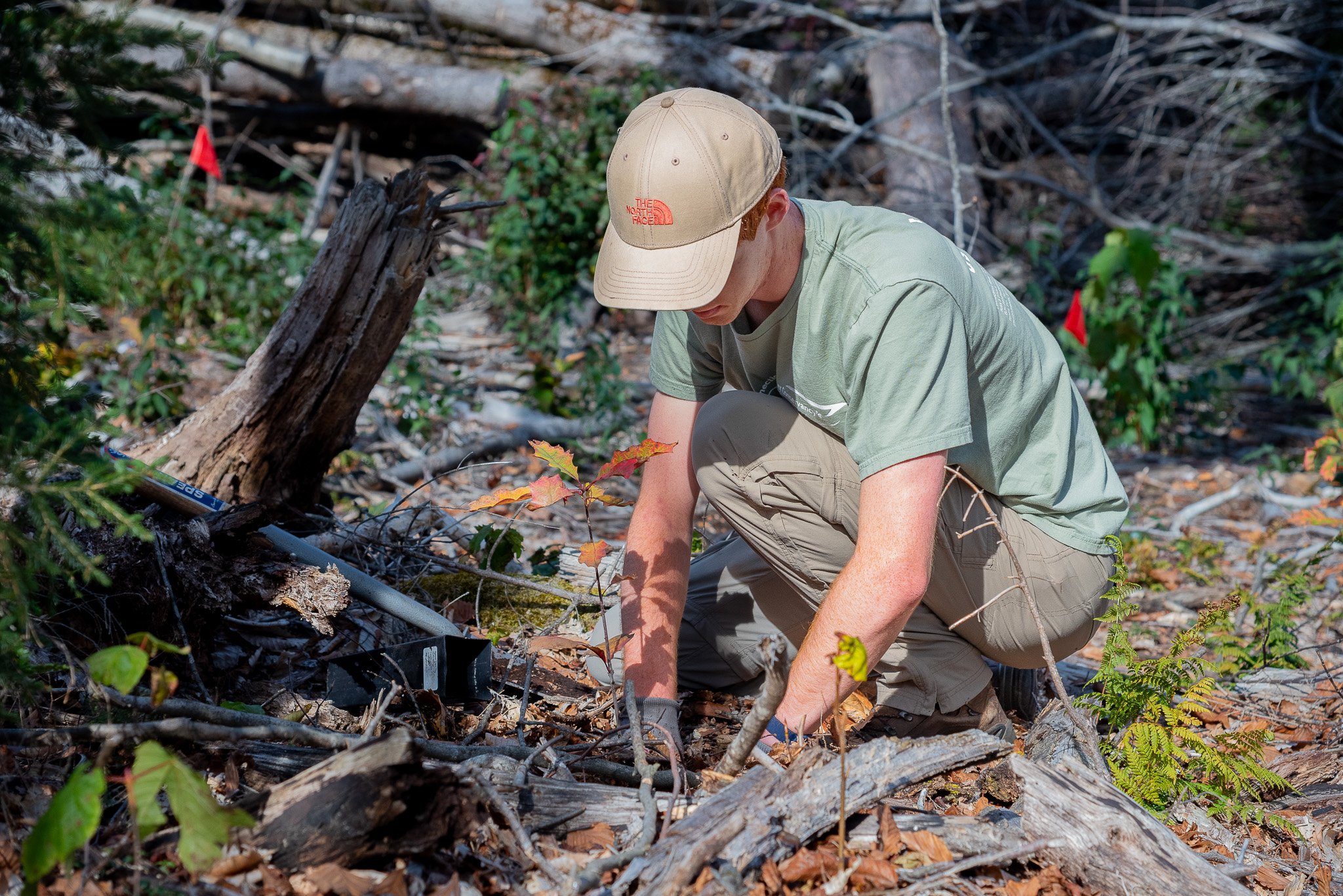
A student volunteer packs down the earth around one of the sapling trees to give it a good foothold in its new forest.
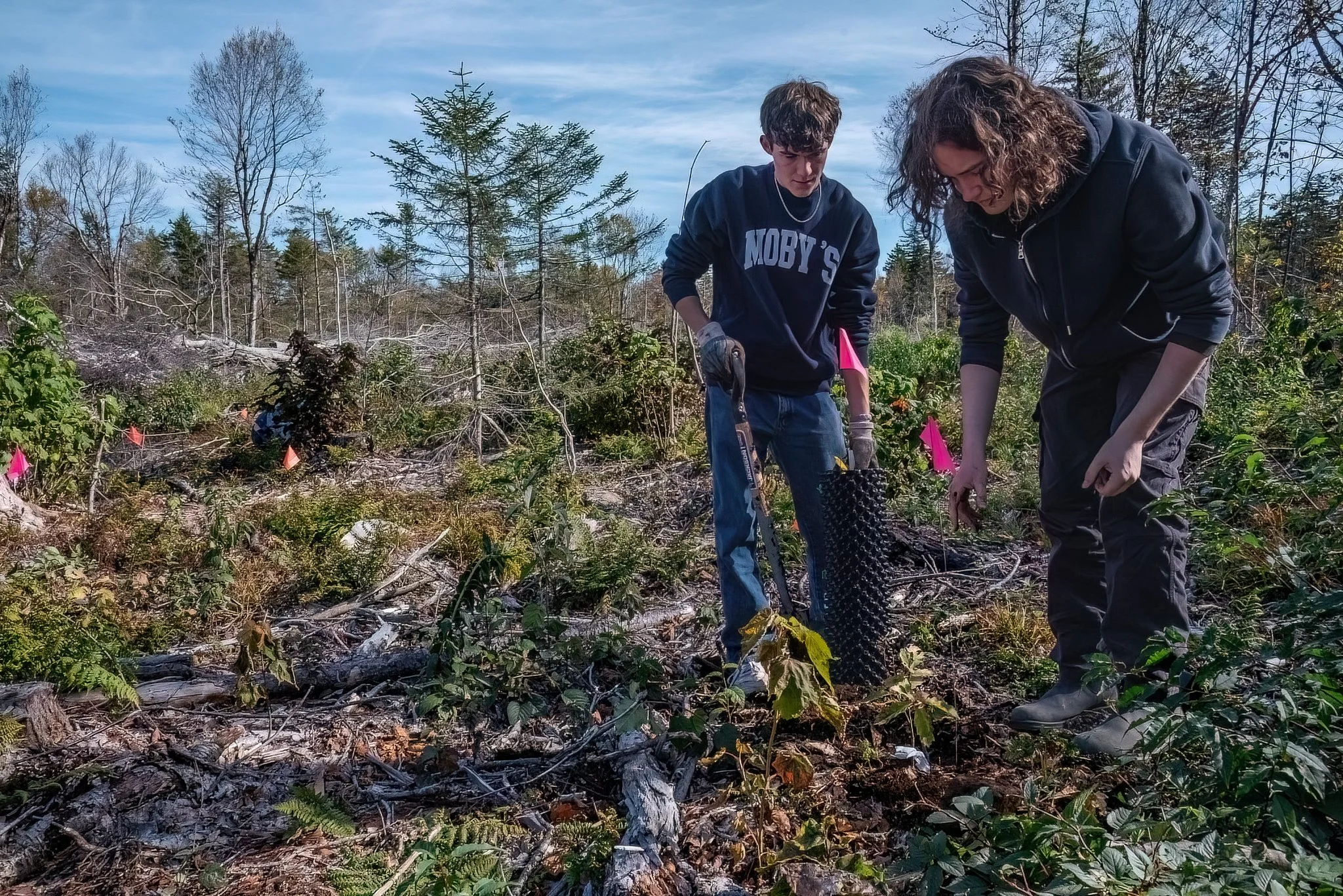
Student volunteers mark planted trees with flags so that the scientists can monitor their success.
All images for this story taken by Malachy Duggan.
Select images from this work used by the The Trustees in their work preserving Massachusetts’ natural spaces and educating on conservation and the environment.